Cafe Furniture Materials That Survive Heavy Daily Cleaning (2026)
Which cafe furniture materials last under sanitizer and daily wiping? Vinyl vs fabric, veneer vs laminate vs stone, wood finishes, steel coatings, foam and glides.
Short answer
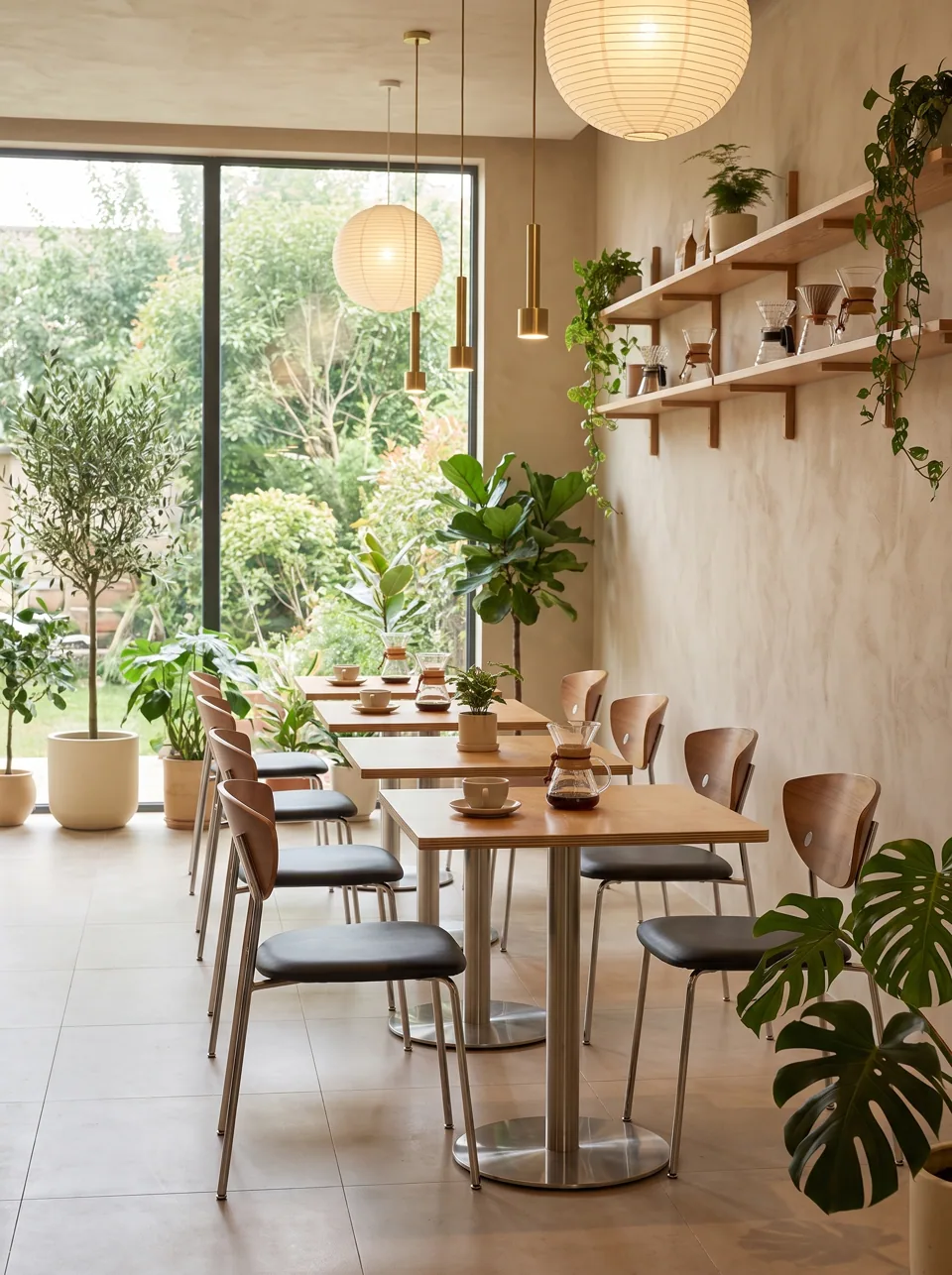
For coffee shops wiped down all day, the most forgiving combination is bleach-cleanable vinyl or polyurethane-coated seats, powder-coated steel frames, and high-pressure laminate or sintered stone tops with sealed edges. Wood and veneer work well if they are finished with a PU or catalyzed lacquer and every edge is sealed. The biggest durability risks are not the materials themselves but unsealed edges, wrong cleaning chemicals and cheap foam.
Crema Seat (a line by EASEN Commercial Furniture) specifies materials per project based on how your team actually cleans. This guide explains the choices.
Why do cafe furniture finishes fail?
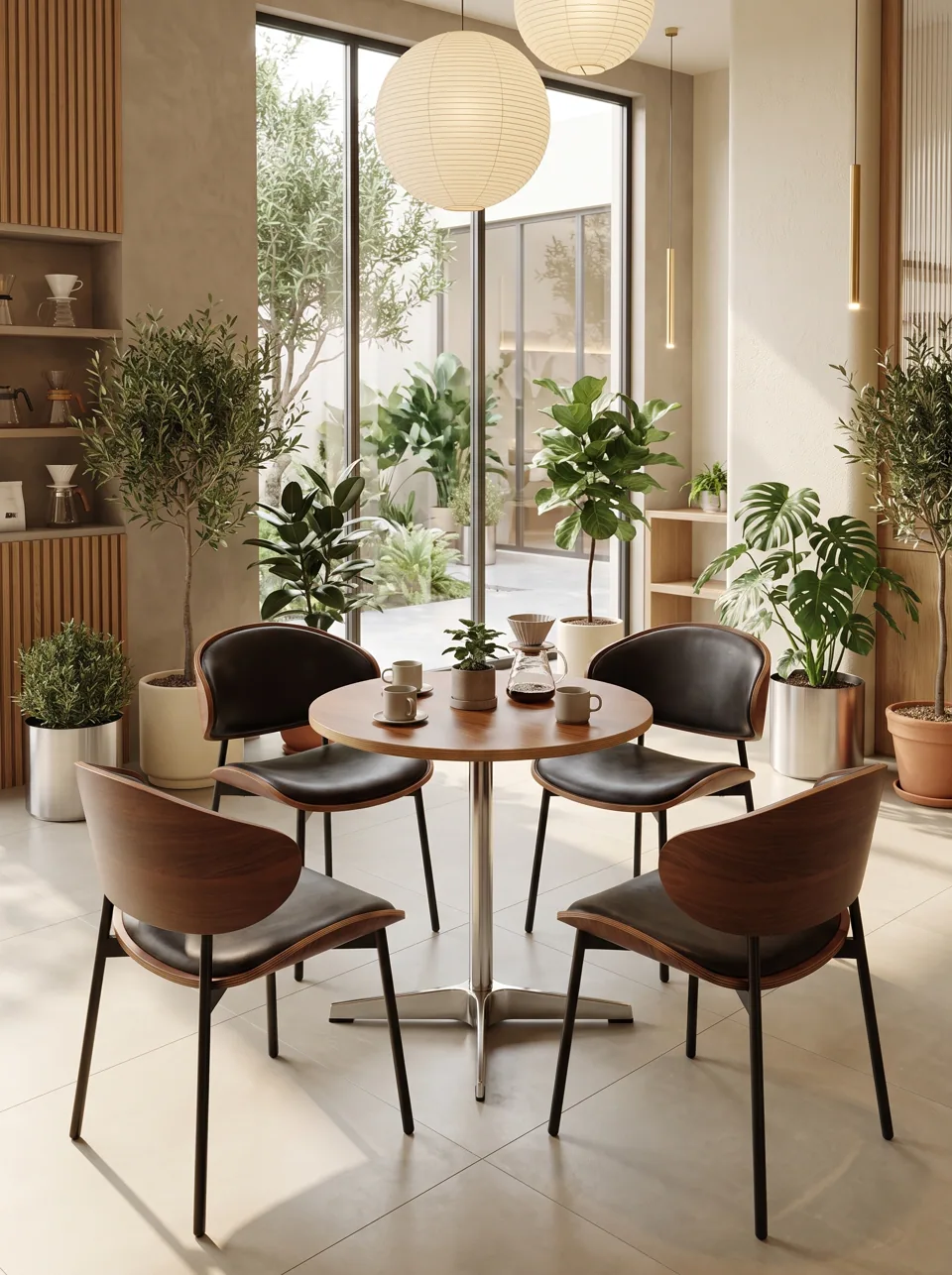
Cafe furniture fails in predictable places. Wood swells where water sits on an unsealed edge. Veneer lifts at the back of a chair where hands and cloths rub it. Fabric seats darken where a sanitizer spray dries in a ring. Painted steel chips at the feet where mops hit it. Foam flattens in the front edge of the seat where every guest sits down.
Most of these failures are specification decisions, not bad luck. A table top costs much the same to make whether the edge is sealed or not; the difference shows up eighteen months later.
Which seat upholstery is easiest to clean?
| Material | Cleanability | Abrasion (typical commercial spec) | Feel | Best for |
|---|---|---|---|---|
| Commercial vinyl (PVC) | Excellent, many are bleach-cleanable | High | Smooth, cool | Counter-service cafes, kids |
| Polyurethane-coated fabric / faux leather | Very good | Medium-high | Soft, leather-like | Most cafe seats |
| Solution-dyed polyester or olefin woven | Good, often bleach-cleanable | High | Textile | Upholstered armchairs |
| Standard polyester or blends | Fair | Varies | Textile | Low-traffic zones |
| Boucle and velvet | Fair (performance versions better) | Varies | Warm, residential | Lounge corners, evening |
| Natural leather | Fair (needs conditioning) | High | Premium | Low-traffic premium areas |
Abrasion ratings: contract textiles are tested by double rubs (Wyzenbeek, common in the US) or Martindale cycles (common in the UK and Europe). For busy hospitality seating, many specifiers look for at least 30,000 Wyzenbeek double rubs or around 40,000 Martindale cycles. Ask your fabric supplier for the test method and number, and compare like with like.
Cleaning chemicals: check the manufacturer's cleaning code before buying. Quaternary ammonium sanitizers and diluted bleach are standard in many cafes but will discolor some fabrics and dry out some faux leathers. Choose the fabric for the chemical, not the other way round.
Which tabletop material lasts longest in a cafe?
| Top material | Heat | Stains | Scratches | Water at edges | Look |
|---|---|---|---|---|---|
| High-pressure laminate (HPL) | Good | Excellent | Good | Excellent if edge-sealed | Wide range, incl. wood |
| Sintered stone | Excellent | Excellent | Excellent | Excellent | Stone, marble, terrazzo looks |
| Wood veneer, PU or catalyzed lacquer | Fair | Good | Fair | Good if edges sealed | Warm, real wood |
| Solid wood, lacquered | Fair | Good | Fair, repairable | Good if sealed | Warm, repairable |
| Natural marble | Good | Poor (etches with acids) | Fair | Good | Premium, ages visibly |
| Compact laminate (solid phenolic) | Good | Excellent | Excellent | Excellent | Thin, modern |
For most coffee shops, HPL with a matching or solid-wood edge is the practical answer for two-tops, and sintered stone for tables where food and hot plates land. Use real veneer where the look matters and protect it with a durable lacquer. Our Sintered Stone Four-Top frames its top to protect the stone's corners from chips.
What wood finish survives daily cleaning?
Wood itself is durable; the finish is what takes the wear. In commercial cafe furniture you will meet:
- PU (polyurethane) lacquer: hard, chemical-resistant film, the most common choice for commercial chairs and tables.
- Catalyzed (pre-catalyzed or post-catalyzed) lacquer: a hard, durable film widely used in the US contract industry.
- NC (nitrocellulose) lacquer: easy to apply and repair but softer; less suitable for heavy cleaning.
- Oil and hardwax oil: beautiful and repairable but needs regular maintenance; not recommended for high-turnover cafe tables.
Insist on sealed undersides and edges. Water and cleaning spray run under tops and into end grain; an unsealed underside lets the board move and the top can warp or delaminate.
Steel and metal: powder coat or paint?
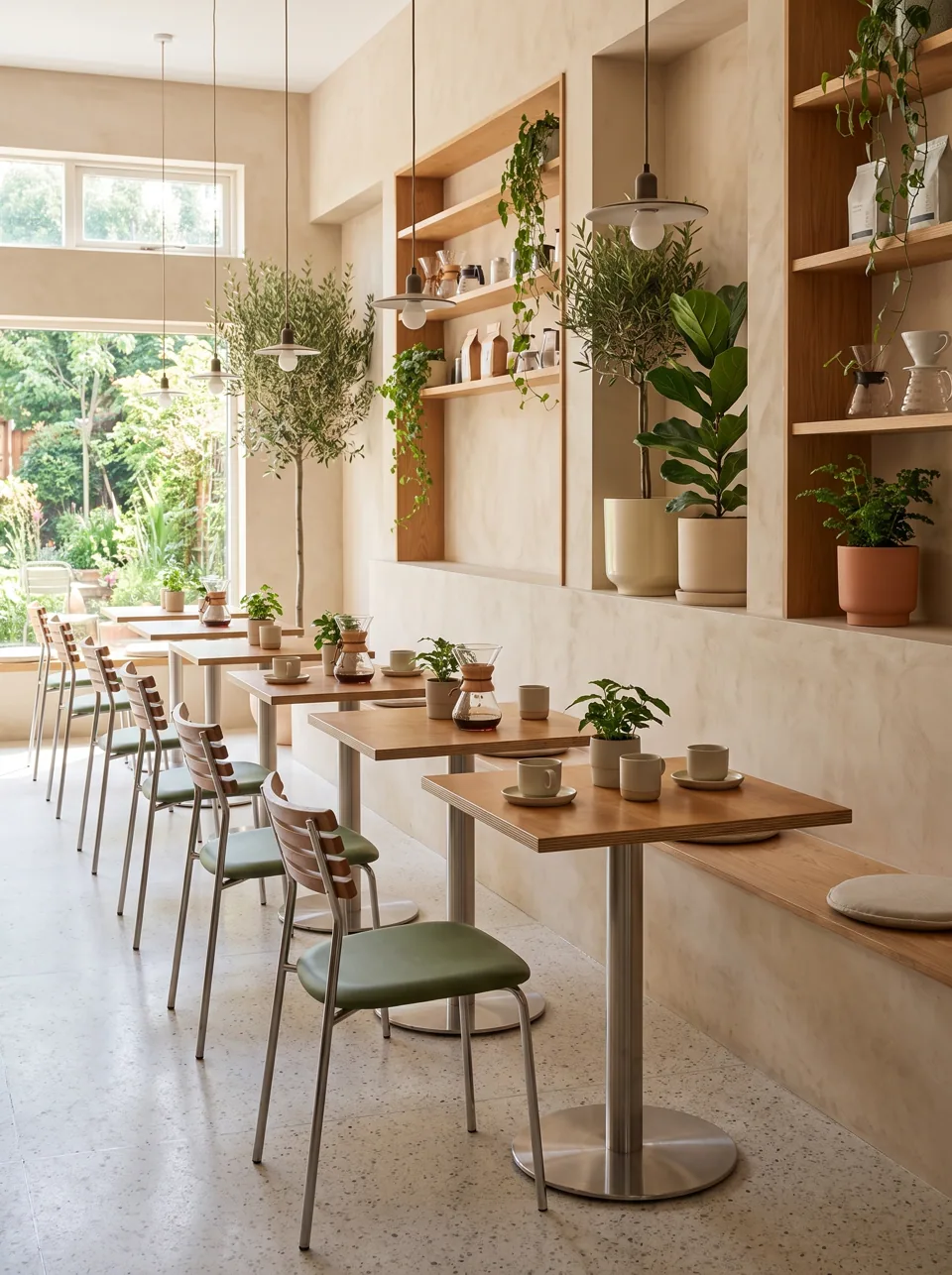
Powder coating is a dry powder baked onto steel, forming a thicker, tougher film than wet paint. It is the standard for commercial chair frames and table bases. For extra protection at the feet, specify glides that cover the tube end so mops hit plastic, not coating. For patios or coastal sites, ask about galvanizing or aluminum frames under the powder coat, because steel rusts where the coating chips.
Brass and gold finishes on cafe furniture are usually plated or PVD-coated steel. PVD (physical vapor deposition) is far more resistant to wear and cleaning chemicals than standard plating.
Foam: why density matters
The foam in a seat determines how long it stays comfortable. Commercial seats typically use high-resilience (HR) polyurethane foam around 1.8-2.5 lb/ft³ (30-40 kg/m³), often with a firmer layer below and a softer layer on top. Low-density foam feels fine on day one and flattens within months, especially along the front edge.
Foam is also where fire requirements live. In the US, upholstered seating is commonly specified to CAL TB 117-2013; in the UK, contract seating to BS 7176 with BS 5852 ignition sources (medium hazard for most hospitality). We specify foams and fabrics to meet these on request and supply test reports for the specific item where available. Check your local requirement.
Glides: the smallest part that saves the most money
| Floor | Recommended glide | Avoid |
|---|---|---|
| Porcelain tile, concrete, terrazzo | Nylon or PTFE | Felt (traps grit and scratches) |
| Wood, LVT | Felt or felt-bottom glides, replaced regularly | Bare metal |
| Mixed floors | PTFE with felt insert, or swap seasonally | One type everywhere |
Glides should be replaceable, not glued. Budget to replace them every 6-12 months in a busy cafe.
Material specification checklist
- [ ] Seat material matches your sanitizer and cleaning routine
- [ ] Fabric abrasion test method and result requested
- [ ] Table edges and undersides sealed
- [ ] Wood finish is PU or catalyzed lacquer, not oil, for high-turnover tables
- [ ] Steel powder-coated; galvanized or aluminum for outdoor use
- [ ] HR foam density confirmed
- [ ] Fire standard for upholstered seats confirmed for your market
- [ ] Replaceable glides chosen for your floor
- [ ] Spare seat pads or fabric ordered for future repairs
Common mistakes
- Choosing a fabric by color swatch alone. Ask for the cleaning code and abrasion rating before the color.
- Oiled tables in a busy cafe. They look wonderful at opening and blotchy three months later.
- Felt glides on tile. They collect grit and scratch the floor, then fall off.
- Unsealed table undersides. The top absorbs moisture unevenly and can warp.
- Bleach on non-bleach-cleanable seats. It discolors and weakens many fabrics and coatings.
- No spare material. Order a few meters of seat fabric with the furniture so you can reupholster damaged seats in the same dye lot.
FAQ
What is the easiest cafe chair material to clean?
Powder-coated steel frames with bleach-cleanable vinyl or polyurethane-coated seats are the easiest. A sealed veneer back adds warmth without much extra care. See our cafe chairs.
Is veneer durable enough for a coffee shop?
Yes, if it is finished with a PU or catalyzed lacquer and every edge is sealed. Most veneer failures start at an unsealed edge or a cracked finish.
Is sintered stone better than marble for cafe tables?
For daily use, generally yes. Sintered stone resists stains, heat and scratches and does not etch with acidic drinks like natural marble does.
How often should cafe furniture be maintained?
Wipe daily with a cleaner approved for each material, check and tighten chair joints and table bases every 3-6 months, and replace glides every 6-12 months.
Can Crema Seat match my brand colors?
Yes. Seat upholstery, wood stain and powder-coat colors are made to order, and we sample finishes for approval before production.
Tell us your seat count, floor area and opening date, and we will reply with a seat plan, a furniture schedule and a factory-direct quote.
Request a quote