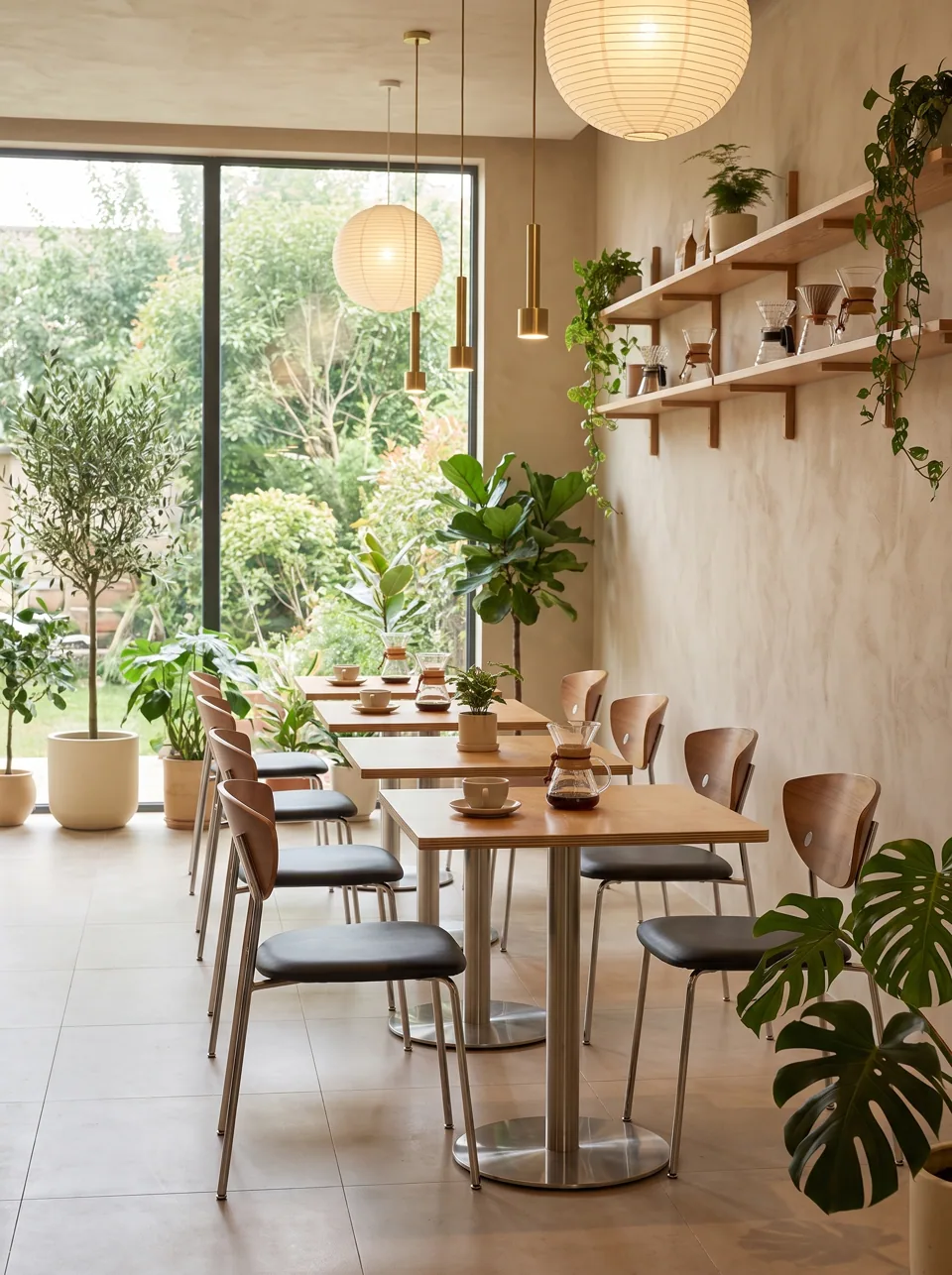
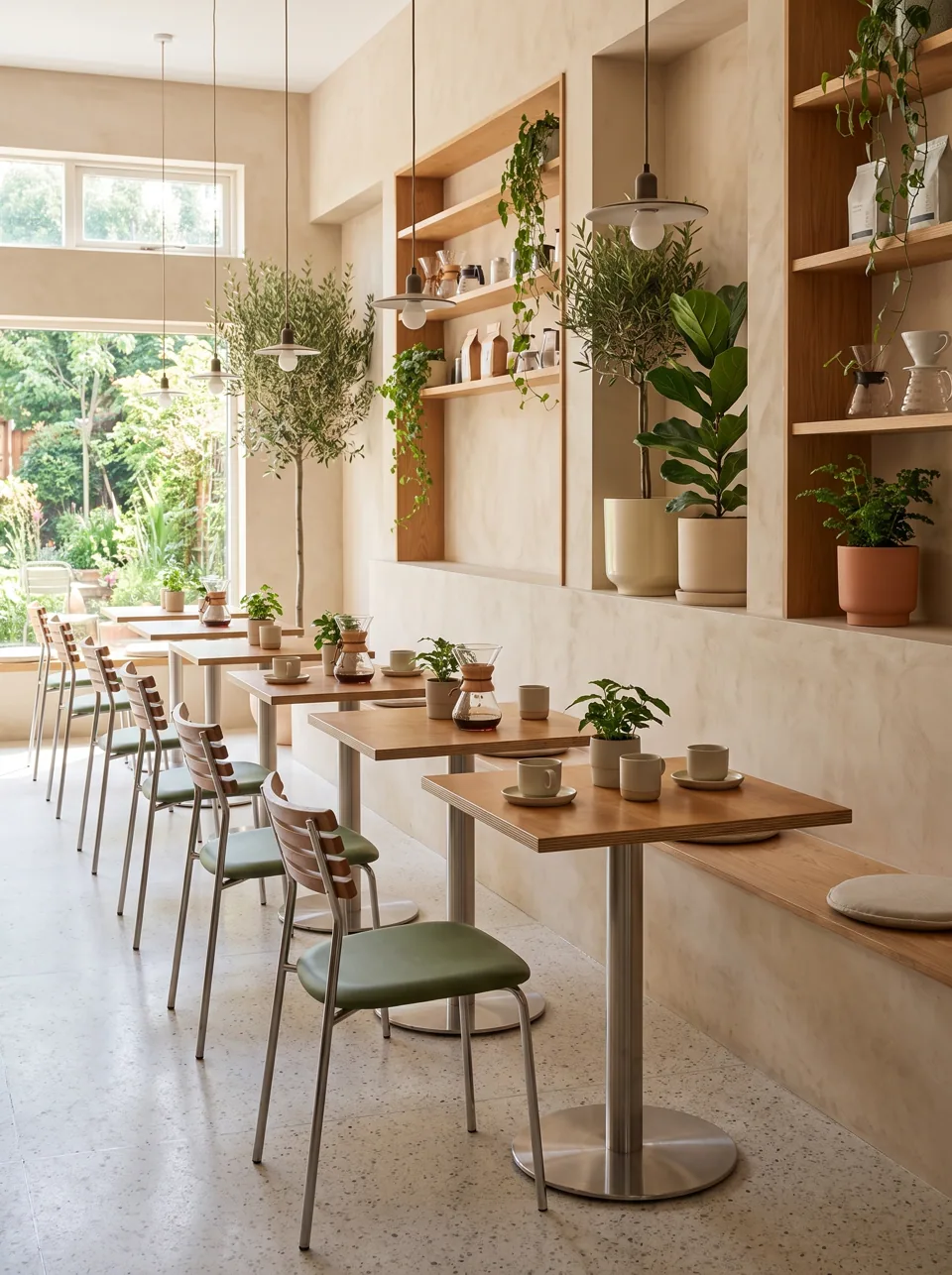
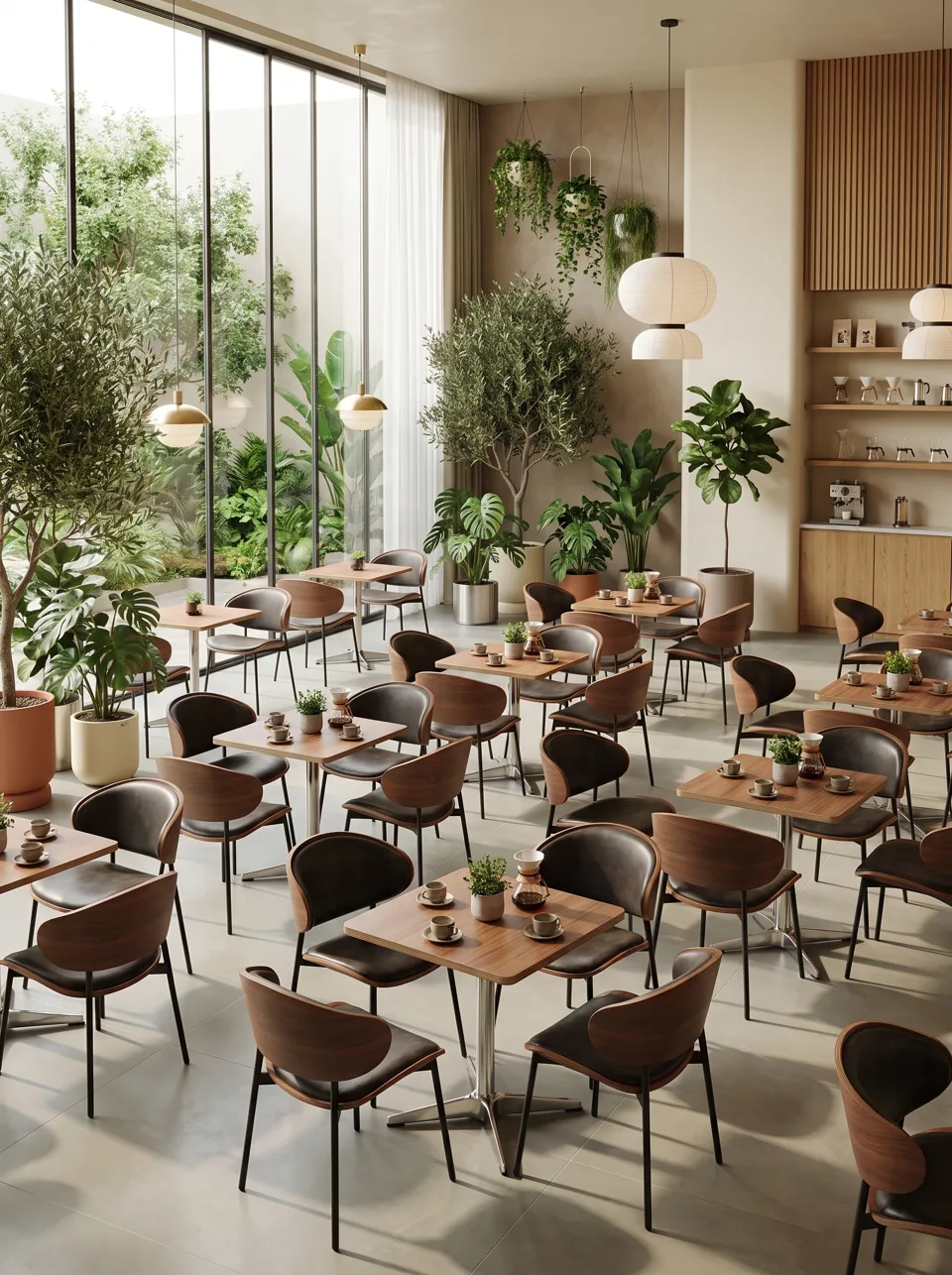
Cafe Chairs Compared: Bentwood, Veneer, Metal, Upholstered and Lounge (2026)
Which cafe chair suits your coffee shop? We compare bentwood, molded veneer, metal, upholstered and lounge chairs on size, comfort, cleaning and durability.
Short answer
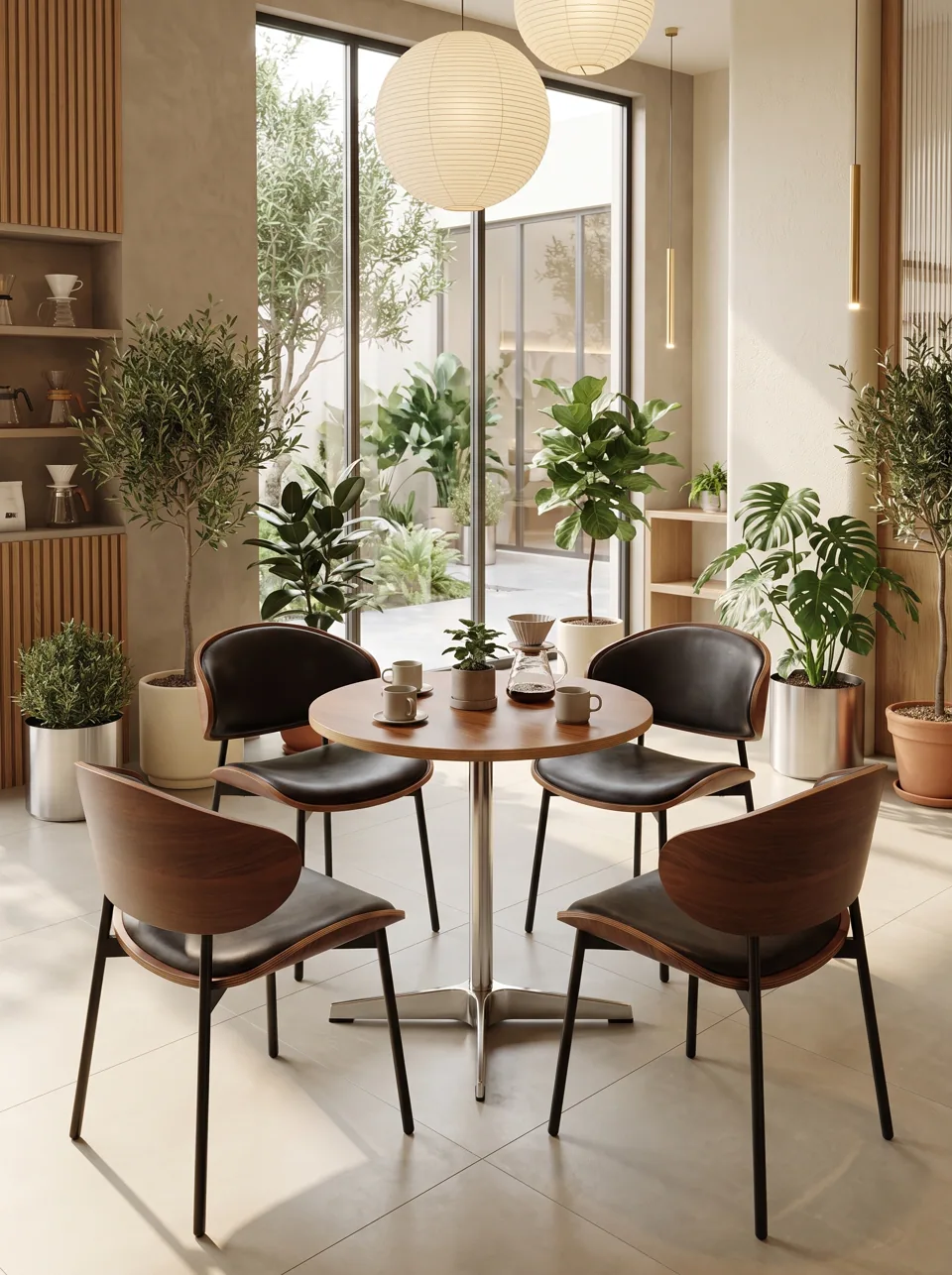
For most coffee shops, a molded veneer or wood chair 17.5-19 in (44-48 cm) wide with an 18 in (46 cm) seat height is the best all-rounder: compact, warm-looking and easy to wipe. Choose steel-leg versions for heavy traffic and hard floors, upholstered armchairs where guests stay longer than 45 minutes, and lounge chairs only for one planned corner. Match chair width to your table first, then choose the look.
This comparison comes from Crema Seat (a line by EASEN Commercial Furniture), which builds cafe chairs to order in Foshan, China.
What are the main types of cafe chairs?
A cafe chair is a commercial side or arm chair sized for small tables and frequent moving. The main families differ in what the frame is made of and how much of the chair is upholstered.
| Type | Typical width | Weight | Comfort for a 45-min stay | Cleaning | Best use |
|---|---|---|---|---|---|
| Bentwood (steam-bent solid wood) | 16.5-18 in (42-46 cm) | Light | Fair (good with seat pad) | Easy | Classic bistro look, tight two-tops |
| Molded veneer back, wood legs | 18-20 in (46-51 cm) | Light-medium | Good | Easy | Neighborhood cafes |
| Molded veneer back, steel legs | 17.5-19 in (44-48 cm) | Light | Good | Very easy | High traffic, tile floors |
| All-metal (steel or aluminum) | 16-18 in (41-46 cm) | Light | Fair | Very easy | Industrial look, patios |
| Upholstered dining armchair | 21-24 in (53-61 cm) | Medium | Very good | Medium | Brunch, four-tops |
| Lounge chair | 24-30 in (61-76 cm) | Medium-heavy | Excellent | Medium | One lounge corner |
Which seat height is right?
Seat height is set by table height, not by taste. A standard cafe table is 29-30 in (74-76 cm) high, and guests need 10-12 in (25-30 cm) between seat and tabletop for their thighs.
| Table or counter height | Seat height | Chair type |
|---|---|---|
| 29-30 in (74-76 cm) dining | 17.5-18.5 in (44-47 cm) | Cafe chair |
| 36 in (91 cm) counter | 24-26 in (61-66 cm) | Counter stool |
| 42 in (107 cm) bar ledge | 29-31 in (74-79 cm) | Bar stool |
| 16-20 in (41-51 cm) coffee/side table | 15-17 in (38-43 cm) | Lounge chair |
Upholstered seats compress. A padded seat measured at 18.5 in (47 cm) unloaded will sit closer to 18 in when occupied, which is why we specify seat height on our drawings for both the frame and the cushion.
Bentwood chairs: pros and cons
A bentwood chair is made from solid wood, usually beech, that is steamed and bent into curves. It is the chair of the European cafe and is still one of the lightest and narrowest options.
Pros: very light and narrow, timeless look, strong for its weight when properly joined, easy to wipe. Cons: a hard wood seat is uncomfortable past 30 minutes without a pad; quality varies widely; joints need re-tightening over years of use.
Molded veneer chairs: pros and cons
Molded veneer is thin layers of wood glued and pressed into a curved shape. It gives a chair its warm, sculpted back while staying light. Our Barista Walnut-Back Chair and Crema Shell Chair use this construction.
Pros: comfortable curved backs, warm look, light, lots of tone options, works with wood or steel legs. Cons: edges must be sealed or the veneer can lift with repeated wet cleaning; cheap veneer chairs can crack at the back joint if the spine is weak.
What to look for: a steel spine or solid back post carrying the veneer, sealed edges, PU or catalyzed lacquer, and replaceable glides.
Metal chairs: pros and cons
All-metal cafe chairs in powder-coated steel or aluminum are the toughest option and often stack. They suit industrial interiors, high-traffic counters and patios.
Pros: near-indestructible, stackable, cleanable with anything, thin profile. Cons: cold and hard without a seat pad, noisy on hard floors without good glides, can look generic.
Many coffee shops settle on a hybrid: a steel frame for durability with a veneer back and padded seat for warmth. That is the logic of our Cortado Steel-Leg Chair.
Upholstered dining armchairs: pros and cons
An upholstered armchair at dining height signals "stay a while." It increases comfort and perceived quality but uses more floor and needs more care.
Pros: the most comfortable dining seat, quieter rooms (soft surfaces absorb sound), premium look. Cons: 3-5 in (8-13 cm) wider than a side chair, arms must clear the table apron, fabric needs cleaning and eventually reupholstery.
Fire and safety: upholstered seating is regulated in many markets. In the US, many jurisdictions and specifiers require CAL TB 117-2013 for upholstered furniture; UK contract seating is usually specified to BS 7176 using BS 5852 ignition sources (medium hazard for most hospitality). We specify foam and fabric to meet the required standard on request and supply test reports for the specific item where available. Check what your local code, landlord and insurer require.
Lounge chairs: when are they worth it?
Lounge chairs are low (seat height around 15-17 in / 38-43 cm) and deep. Each seat uses about 25-35 sq ft (2.3-3.3 m²) including clearances, roughly double a dining seat. They are worth it in one place: a corner that gives the shop its personality and holds guests who buy a second drink. See our lounge corner collection.
How to choose cafe chairs, step by step
- Fix the table sizes first. A 24 in (61 cm) two-top needs chairs under 19 in (48 cm) wide.
- Estimate average stay. Under 30 minutes: veneer or metal with a wooden or thin padded seat. 30-60 minutes: padded seat and a supportive back. Over 60 minutes: consider armchairs for some seats.
- Check the floor. Tile and concrete: steel legs and nylon or PTFE glides. Wood: felt glides and lighter chairs.
- Decide what gets cleaned. If staff wipe chairs with sanitizer daily, choose vinyl or polyurethane-coated seats and sealed wood.
- Check the arm height. For armchairs, keep arms at least 1 in (25 mm) below the underside of the table apron.
- Confirm fire requirements for upholstered seats in your market before you choose fabric.
- Order a sample. Sit on it for 45 minutes at your actual table height before signing off the run.
Common mistakes
- Choosing a chair from a photo without checking width. The most common reason a layout loses four to six seats.
- Hard wooden seats in a laptop cafe. Guests who stay two hours will not come back to a chair that hurts after 30 minutes.
- Arms that hit the table. If an armchair cannot slide under the table, it sits in the aisle all day.
- Felt glides on tile. Felt picks up grit and becomes sandpaper; use nylon or PTFE on hard floors.
- Fabric chosen by color alone. A beautiful woven fabric that cannot take a sanitizer spray will look tired within months.
- One chair type for the whole room. Mixing a compact side chair with a few armchairs or a lounge pair gives guests a choice and makes the room feel designed.
FAQ
What is the most durable cafe chair?
All-metal or steel-frame chairs with powder coating are the most durable against impact and moisture. A steel frame with a sealed veneer back and vinyl seat pad combines that durability with comfort and warmth.
How wide should a cafe chair be?
For a two-top 24 in (61 cm) wide, choose chairs no wider than about 19 in (48 cm). Upholstered armchairs at 21-24 in (53-61 cm) need tables 30 in (76 cm) wide or more.
Are upholstered chairs a good idea in a coffee shop?
Yes, in the right zone. Use bleach-cleanable vinyl or performance fabric, place them at four-tops or window tables where guests linger, and keep compact side chairs for high-turnover two-tops.
Do cafe chairs need to be fire rated?
Upholstered chairs often do, depending on your jurisdiction, landlord and insurer: CAL TB 117-2013 is the common US reference, BS 7176 the UK contract standard. Wood and metal chairs without upholstery are generally not covered by these upholstered-seating tests. Check with your local authority.
Can you make a counter-height version of a cafe chair?
Yes. Most of our cafe chairs can be made as counter stools (24-26 in / 61-66 cm seat height) or bar stools (29-31 in / 74-79 cm) with a footrest, confirmed on a shop drawing.
Tell us your seat count, floor area and opening date, and we will reply with a seat plan, a furniture schedule and a factory-direct quote.
Request a quote