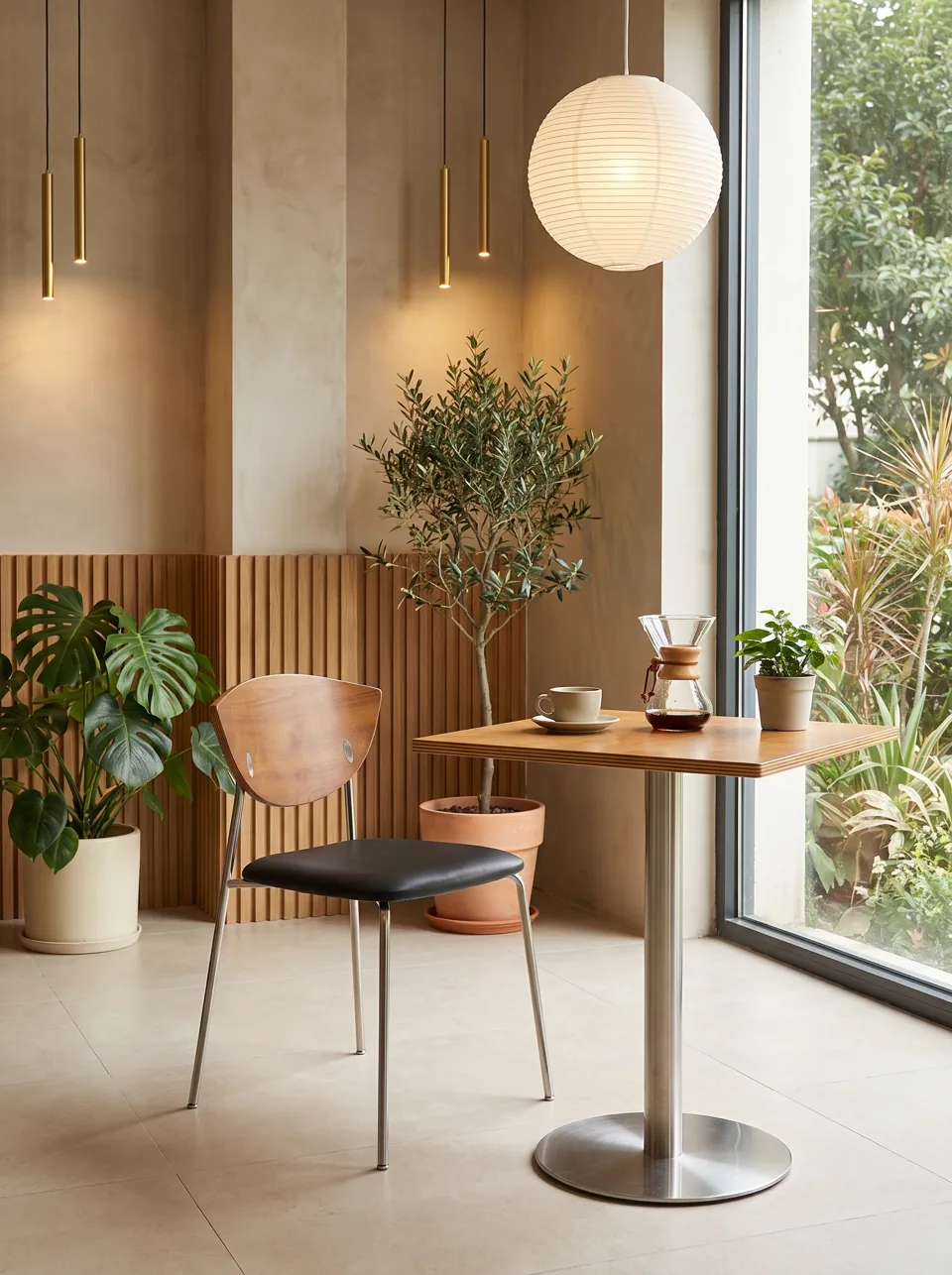
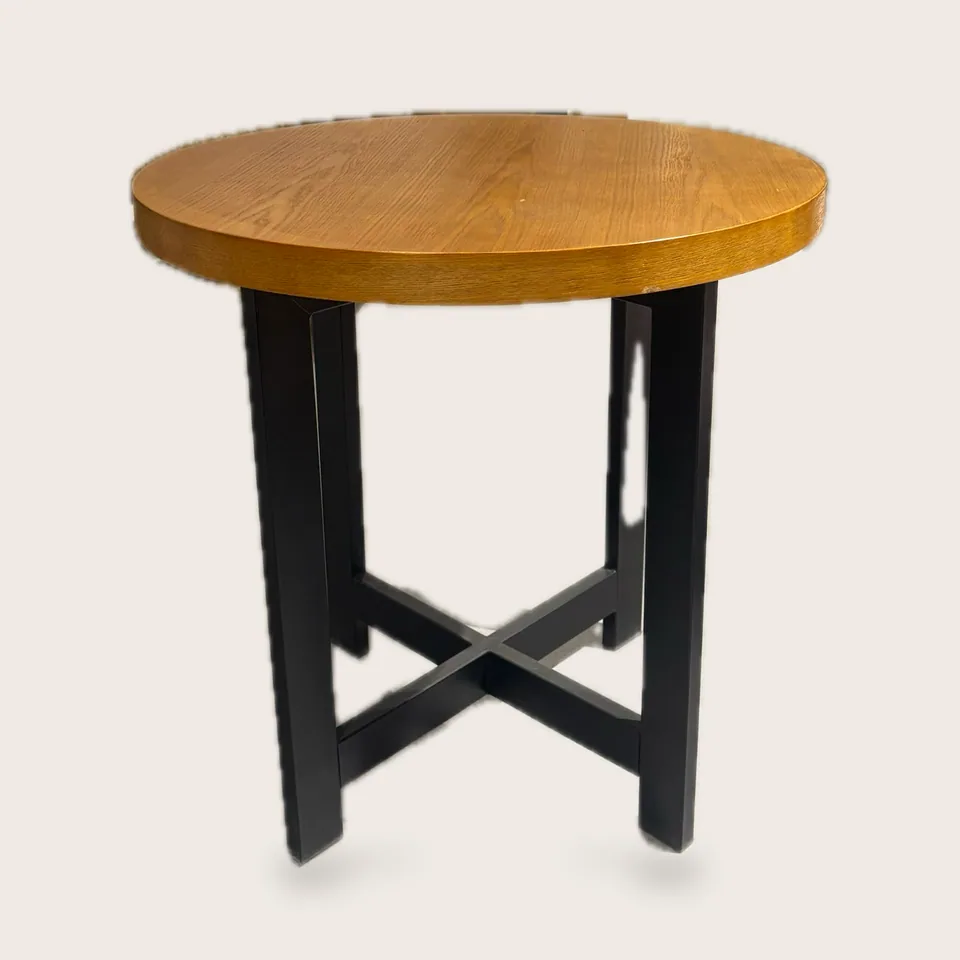
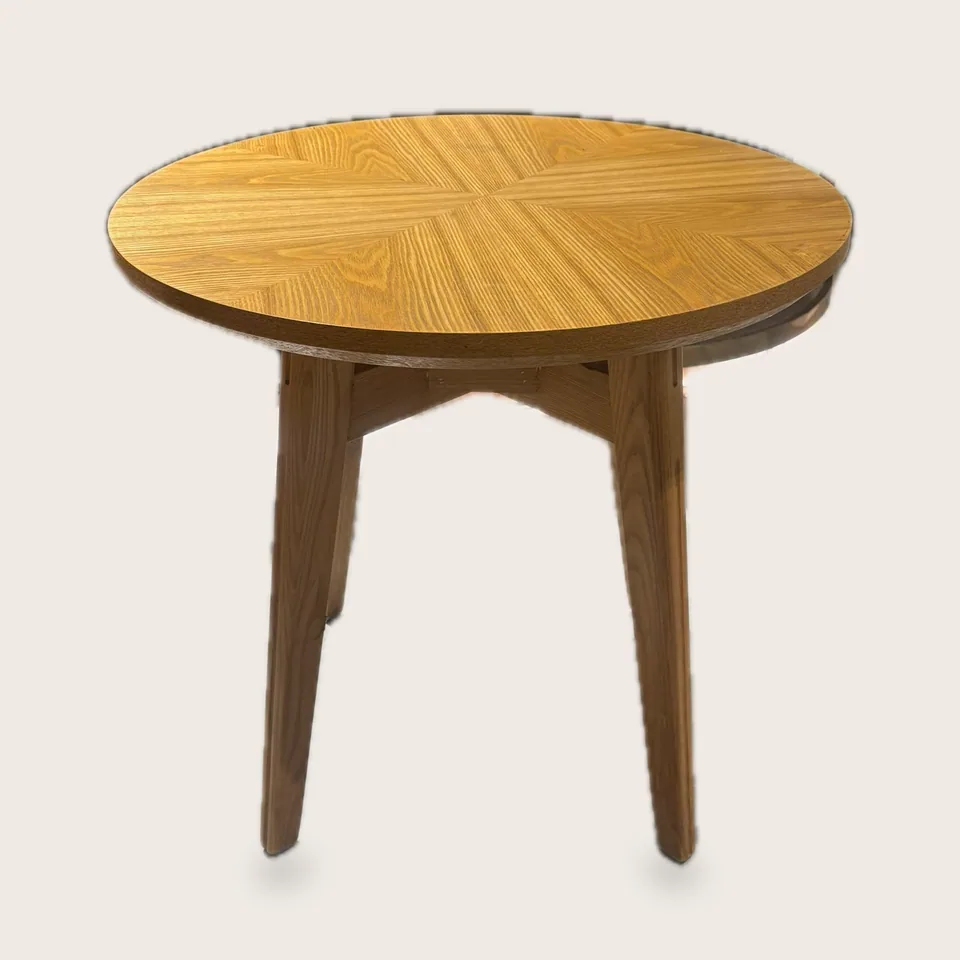
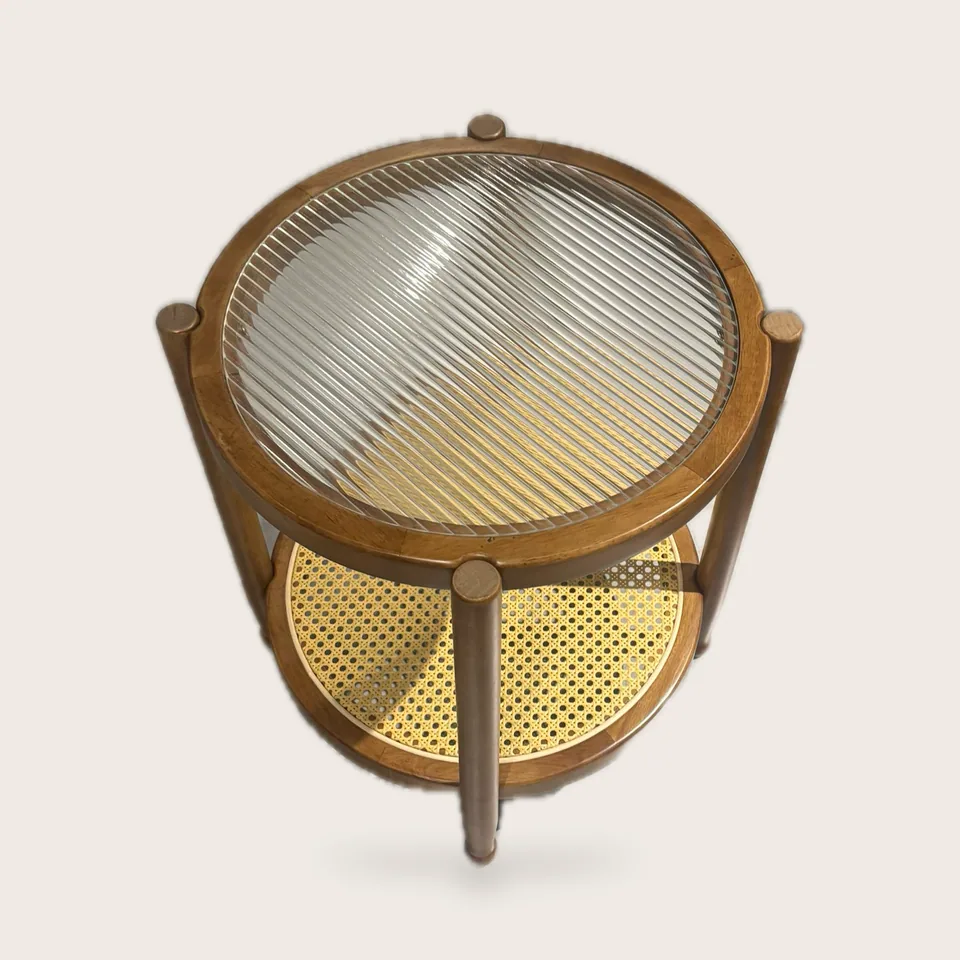
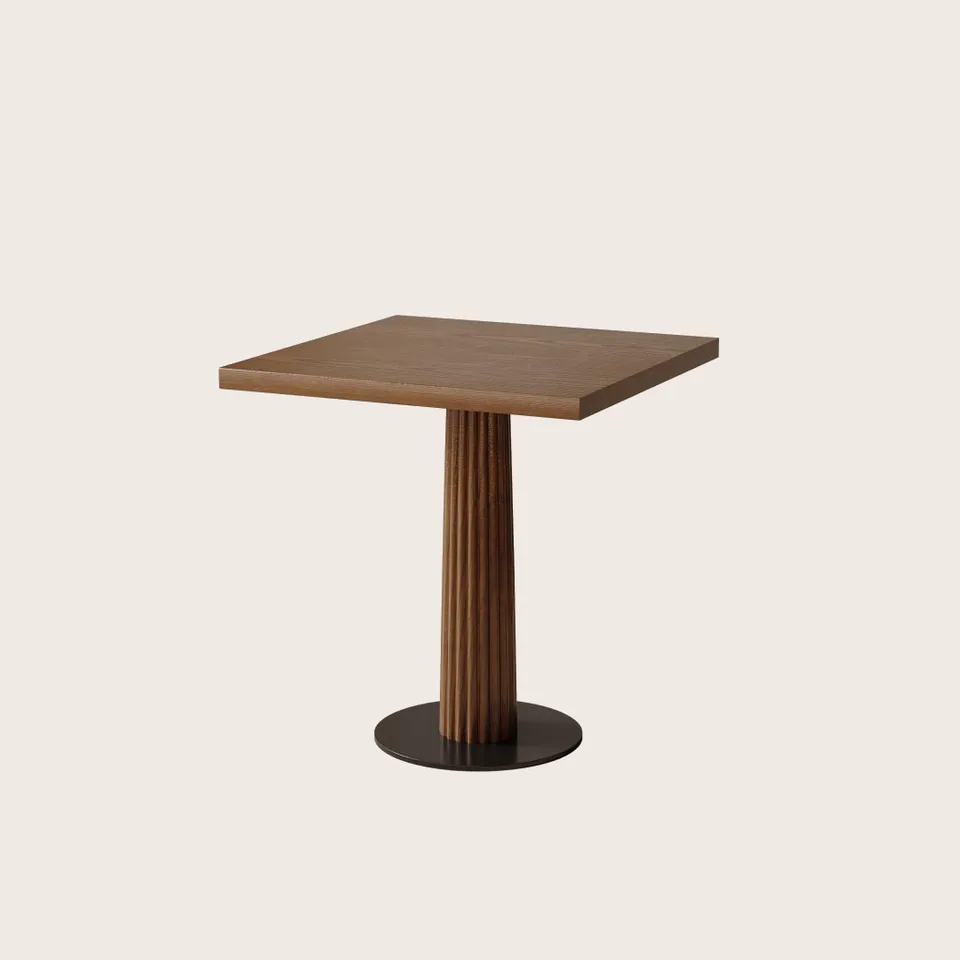
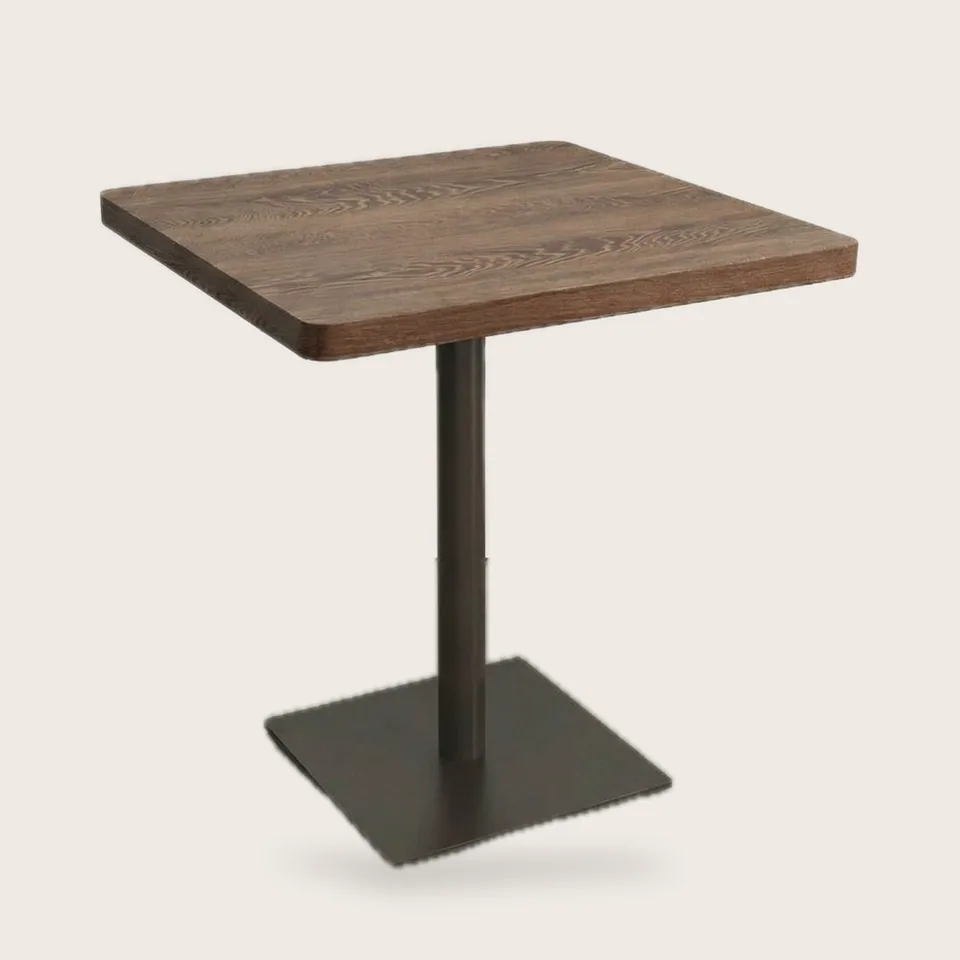
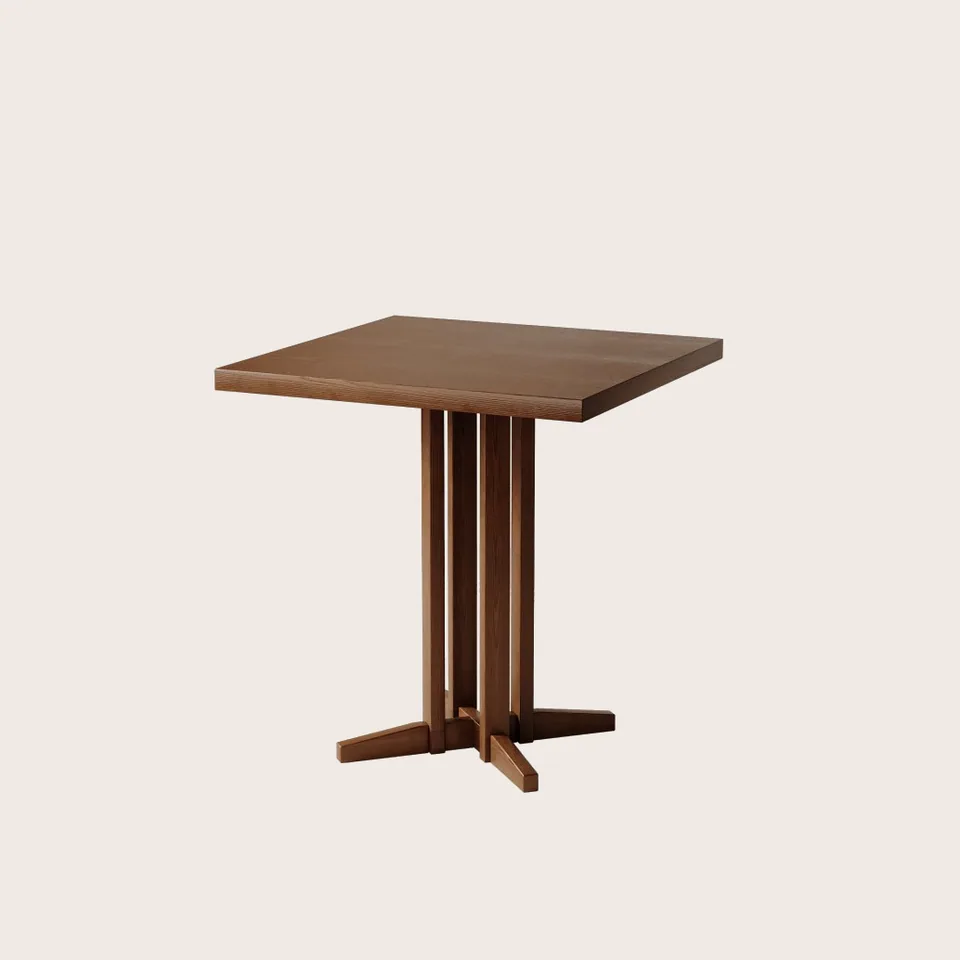
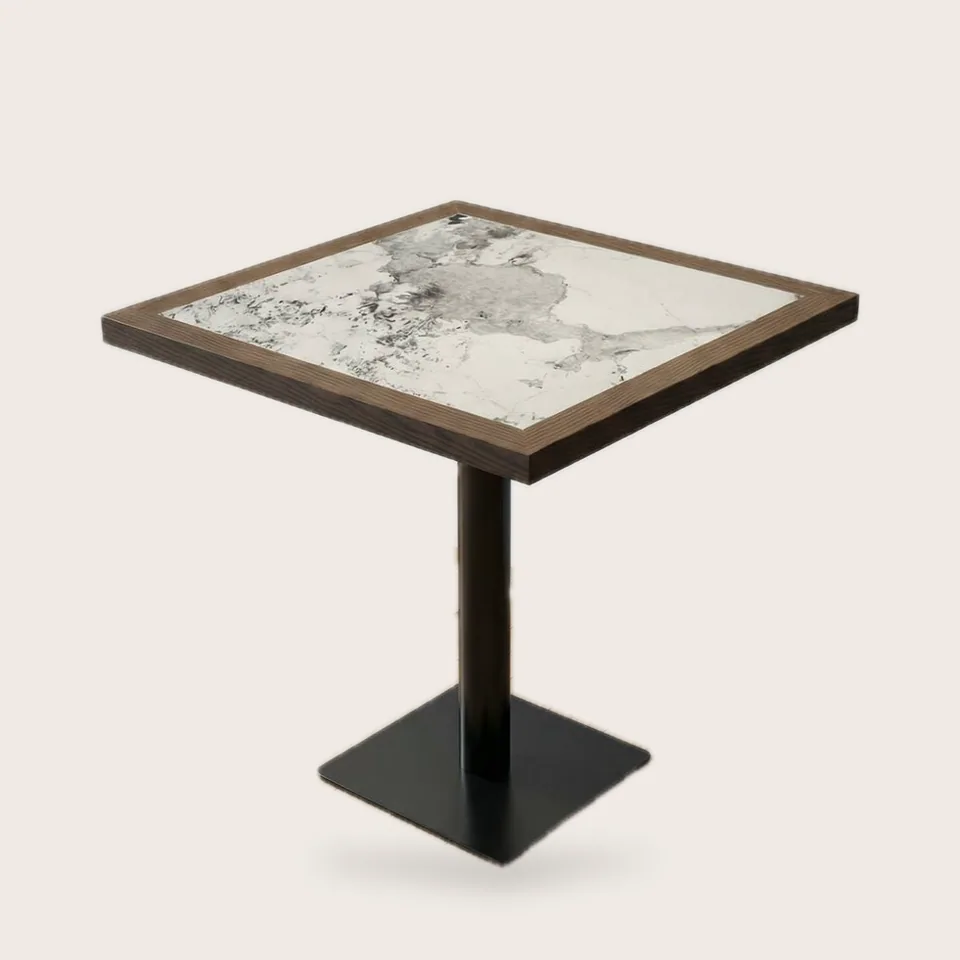
In a coffee shop, the table is the unit of capacity. A run of two-tops that can be pushed together gives you more usable seats than fixed four-tops, because most cafe parties are one or two people. Our cafe tables are built with veneer, solid-wood, laminate or sintered stone tops and steel, cast or solid-wood pedestals.
Picking the right size
| Top size | Seats | Typical use |
|---|---|---|
| 24 × 24 in (61 × 61 cm) | 1-2 | Laptop guests, tight window runs |
| 24 in (61 cm) round | 2 | Narrow aisles, softer flow |
| 28-30 in (71-76 cm) square | 2 (comfortable) | Brunch plates, combinable |
| 30 × 48 in (76 × 122 cm) | 4 | Groups, communal edge |
| 36 in (91 cm) round | 3-4 | Corners, lounge-adjacent |
Base and stability
A pedestal base should span roughly two-thirds of the top width: a 22 in (56 cm) base under a 30 in (76 cm) top, a 17-18 in (43-46 cm) base under a 24 in (61 cm) top. Cast or steel plate bases are heavier and stable; cross bases are lighter and easier to move. Every table we ship has adjustable levelers, because no cafe floor is flat.
Tops that survive the rush
High-pressure laminate with a sealed edge is the most forgiving. Veneer with a catalyzed or PU lacquer looks warmer and holds up to daily wiping if the edges are sealed. Sintered stone resists heat and stains. Tell us the cleaning products your team uses and we will recommend the top.
At least 5% of seating at dining surfaces must be accessible under ADA 2010 §226.1, with surfaces 28-34 in (71-86 cm) high and adequate knee clearance. Pedestal tables help, as the base stays clear of a wheelchair user's knees.